

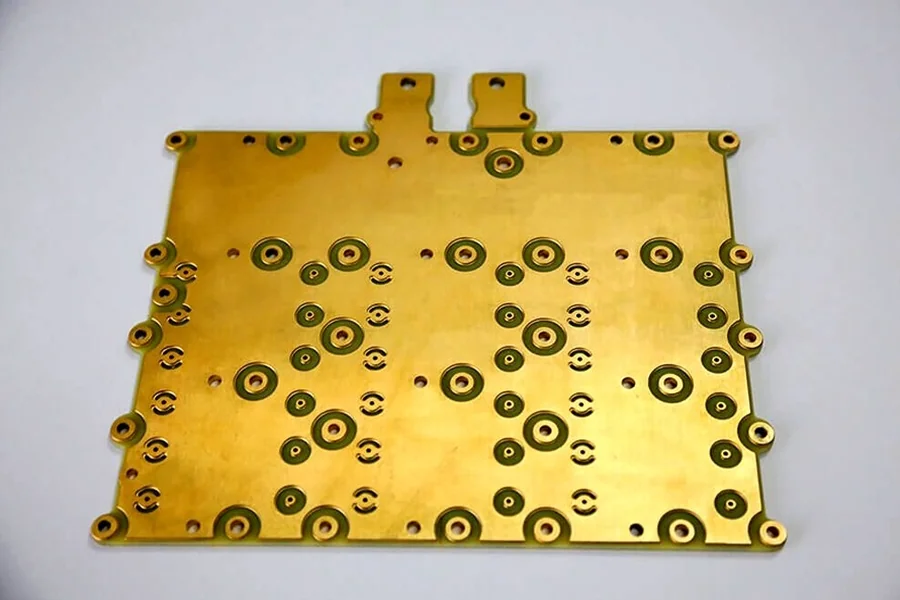
In modern electronic applications, managing high currents and heat is a major challenge. Heavy Copper PCB technology addresses this by offering circuit boards with significantly thicker copper layers, providing superior electrical performance, mechanical strength, and thermal management. These boards are essential in high-power applications such as industrial equipment, power electronics, automotive systems, and LED lighting, where standard PCBs may fail under demanding conditions.
What Is a Heavy Copper PCB?
A Heavy Copper PCB is a printed circuit board that features copper layers thicker than conventional PCBs. While standard PCBs typically have copper thicknesses of 1–2 ounces per square foot, heavy copper boards can range from 3 ounces to more than 10 ounces per square foot, depending on the application. The increased copper thickness allows the board to carry higher currents, reduce resistive losses, and manage heat more effectively.
These boards are structured with a copper circuit layer, a dielectric layer for electrical insulation, and a base material that provides mechanical stability. The thick copper also reinforces the board’s structural integrity, making it resistant to warping or damage under thermal and mechanical stress.
Advantages of Heavy Copper PCB
The primary advantage of a Heavy Copper PCB is its ability to handle high current loads without overheating. This is crucial for power electronics, including inverters, converters, and motor controllers, where excessive heat can reduce component efficiency and reliability. The thicker copper layers dissipate heat more effectively, minimizing hot spots and improving overall performance.
Heavy copper PCBs also provide enhanced mechanical strength. The additional copper supports larger and heavier components and increases the board’s durability in applications exposed to vibration or mechanical stress, such as automotive and industrial environments.
Another significant benefit is improved electrical performance. Reduced resistance in the copper traces ensures lower voltage drops and better signal integrity, which is particularly important in high-current circuits and high-frequency applications.
Applications of Heavy Copper PCB
Heavy Copper PCB technology finds its applications in multiple industries. In industrial automation, these boards are used in power distribution units, motor drives, and high-current controllers where reliability and heat management are essential. In the automotive sector, heavy copper PCBs are applied in battery management systems, electric vehicle power modules, and motor controllers, where consistent performance under high load is required.
Power electronics, such as inverters, converters, and high-current power supplies, also rely on heavy copper PCBs to prevent overheating and ensure efficient operation. LED lighting systems benefit from heavy copper boards by distributing heat away from high-power LEDs, increasing lifespan and light output. Even in telecommunications and high-frequency devices, these PCBs maintain electrical performance and thermal stability under demanding operating conditions.
Manufacturing Considerations
Manufacturing a Heavy Copper PCB requires specialized techniques. Thicker copper layers demand precise etching and plating processes to maintain uniformity and avoid defects. Thermal vias and additional layers are often incorporated to enhance heat dissipation, and careful selection of dielectric materials ensures electrical insulation and mechanical stability.
Quality control is critical in heavy copper PCB production. Each board undergoes electrical testing, thermal performance verification, and mechanical inspection to ensure it meets the design specifications and can handle high-current and high-temperature conditions reliably. Surface finishes such as ENIG, HASL, or immersion silver are applied based on soldering requirements and long-term performance expectations.
Choosing a Trusted Supplier
Partnering with a reliable Heavy Copper PCB supplier is essential for obtaining high-quality, durable, and efficient boards. An experienced supplier can provide a range of copper thicknesses, advanced fabrication techniques, and stringent quality control to meet specific high-power applications. By choosing a reputable Heavy Copper PCB supplier, businesses can enhance performance, improve reliability, and ensure long-term durability for their electronic products.
